 Highlightly Team
The most valuable part of a content workflow is not resizing. It is not copying a quote from a PDF, dragging a text box into place, or rebuilding a carousel because the template broke.
The valuable part is taste. Taste is knowing which sentence matters. It is noticing the statistic that changes the conversation. It is deciding that the obvious hook is too obvious, or that a quieter detail is more honest and more useful.
Let AI set the table. You choose what gets served.
Automation should create more room for judgment. If it removes the judgment, it has only made it easier to publish something generic.
What taste does
The creative work happens before the export button
A polished asset is not automatically a good asset. The real decisions are upstream: which source is worth using, which passage is fair to quote, what context belongs beside a number, which audience needs this idea, and whether the claim is strong enough to make public.
Those decisions are not a failure of automation. They are the reason automation is useful. The more production work a tool absorbs, the more time a person can spend on the part that cannot be reduced to a button: noticing and choosing.
Automate the right layers
Protect your attention from low-value repetition
What to automate and what to protect
The failure mode
Generic speed is still generic
Without AI, content production can be too slow. With the wrong AI workflow, output becomes too smooth. Every post gets the same shape, every claim gets the same confidence, and every creative decision becomes a default.
That is why the answer is not to reject automation. It is to automate the layers that compress production while protecting the decisions that create meaning.
A taste-preserving workflow
Bring in real material
Start with a source that contains something specific: an article, report, interview, customer story, transcript, or product document.
Let AI surface options
Use extraction to find quotes, numbers, hooks, screenshots, and key points faster.
Make the editorial choice
Choose the sentence, claim, or tension that deserves the audience's attention.
Use AI for production
Create formats, captions, branded variants, ratios, and exports around the selected idea.
Approve the final asset
Check the source, context, readability, attribution, and whether the finished piece still sounds like you.
Highlightly workflow
Make the options visible before you choose
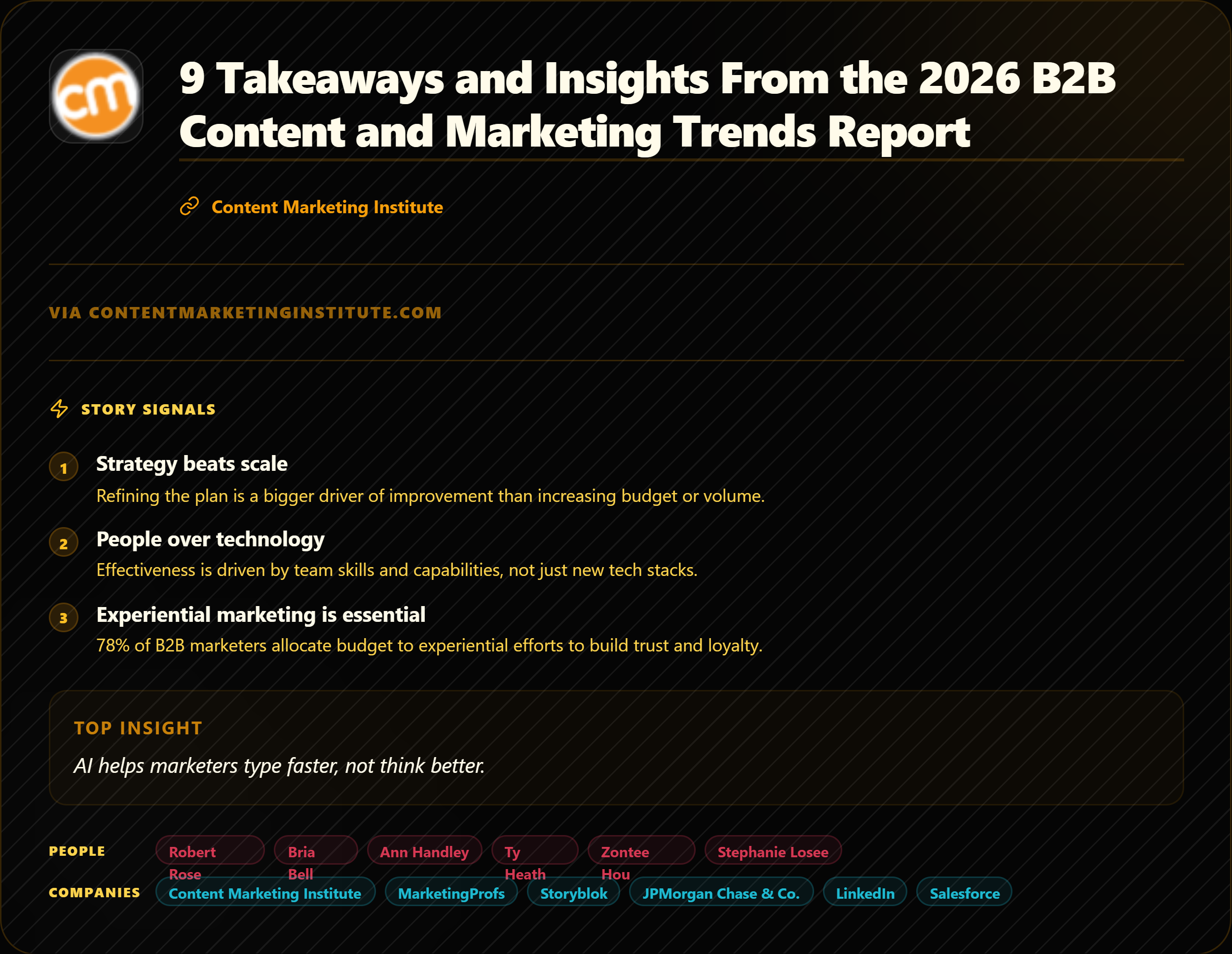
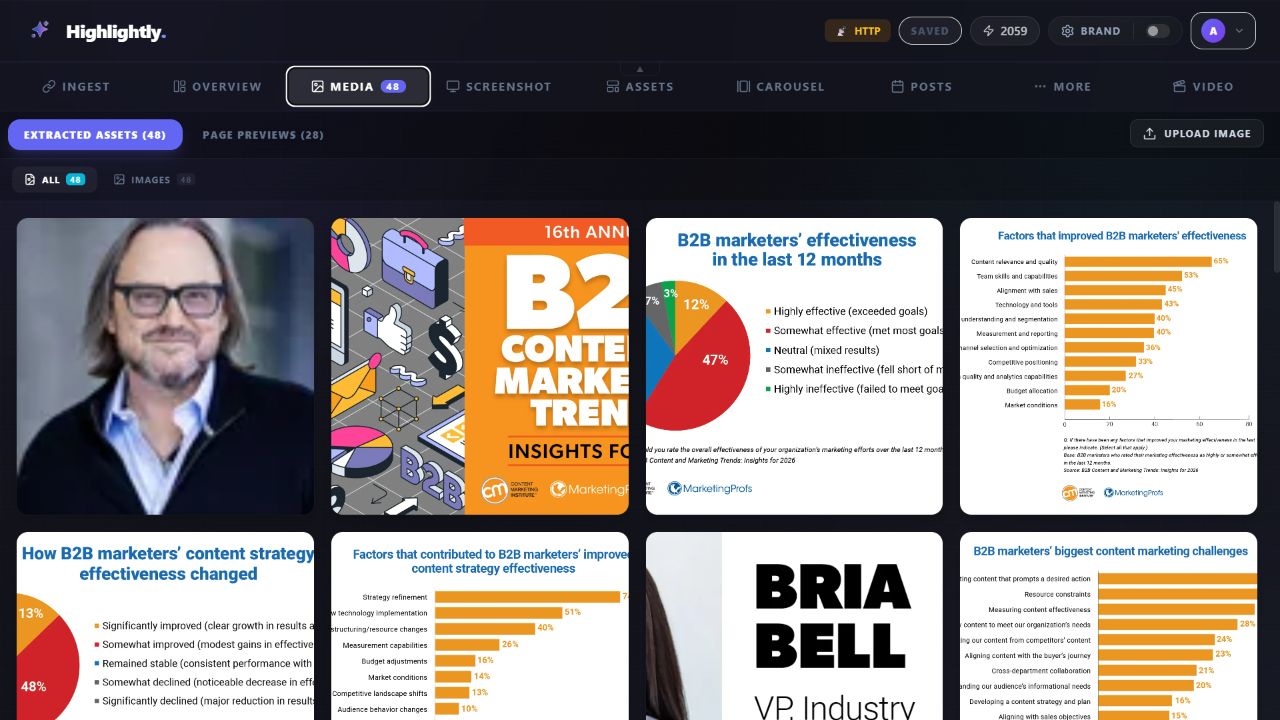
Highlightly ingests the source and puts reviewable material in front of you: quotes, stats, hooks, key points, screenshots, media, and caption angles. You can compare options, choose a card or carousel treatment, apply your brand kit, and export the result without losing the source context.
Keep your edge
Use AI for the work that steals time from your taste.
Start with a source, choose the idea that matters, and let the tool handle the repetitive path from selection to export.
Protect your creative timeThe best AI workflow leaves more room for a human point of view.
Use AI for production compression, not creative surrender. The tool should make your judgment easier to execute, not easier to skip.
- Automate extraction and formatting.
- Keep selection and framing human-owned.
- Treat taste as the scarce creative resource.
Protect the judgment
Automate the production work that steals time from taste.
Extraction, formatting, resizing, and variants are useful places for AI to help. Selection and framing still belong to the person who knows the audience.
Frequently asked questions
Research sources