 Highlightly Team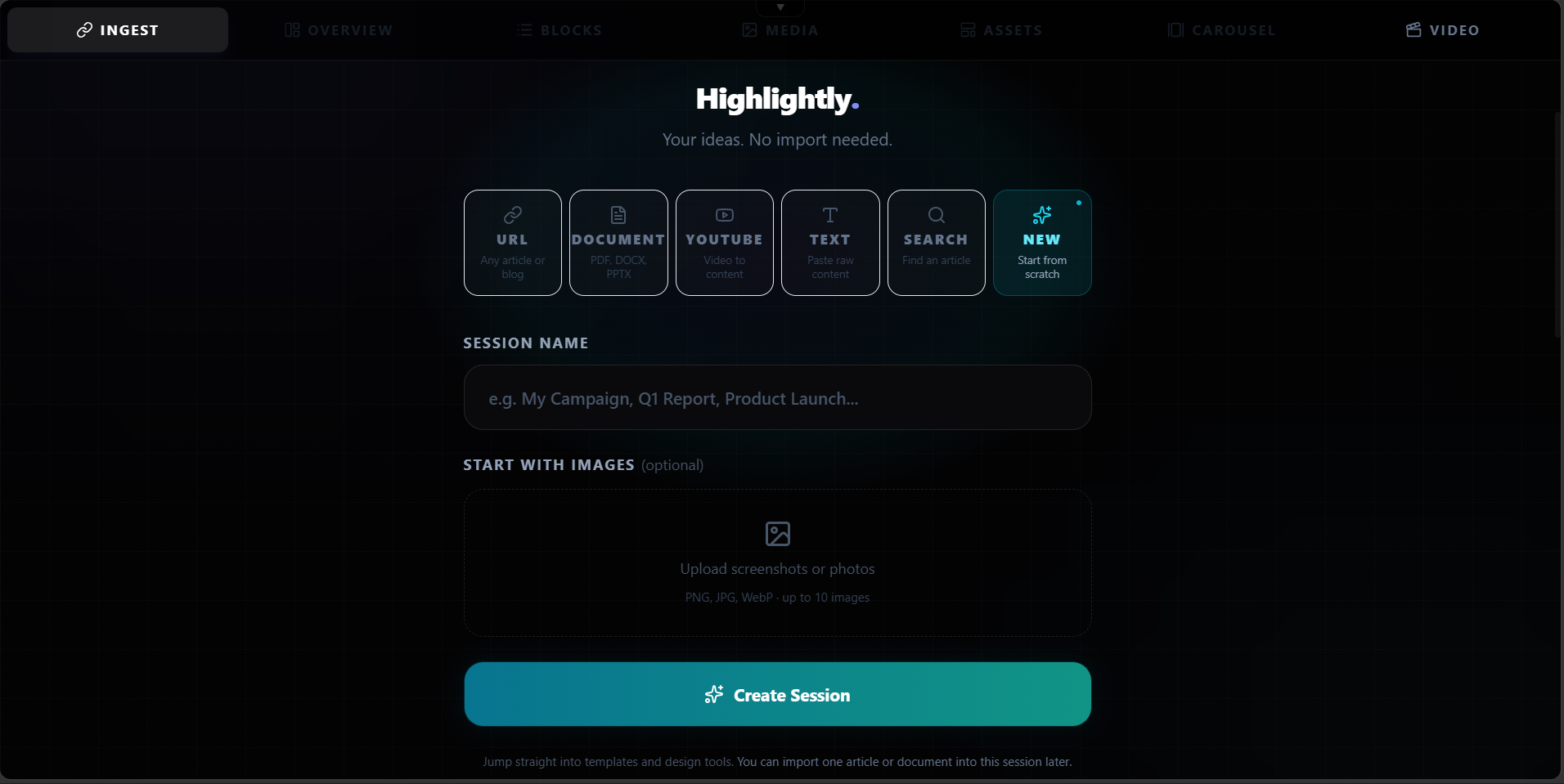
Small teams face a simple math problem: there are more platforms to fill than people to create content. LinkedIn needs a post. X needs a thread. Instagram needs a carousel. The newsletter needs a teaser. And someone still has to ship the product.
You do not need more content. You need more assets from the same content.
The answer is not hiring more people or posting less. It is extracting more value from the sources you already read, write, and reference.
The 1:5 repurposing ratio
One strong source — an article, a report, a case study, a PDF, or a customer story — should yield at least five social assets. That is the minimum. A dense report or research paper can yield ten or more.
This ratio changes the content calendar math. Instead of needing five original ideas per week, you need one good source. The rest is extraction and packaging.
The weekly repurposing session
Batch your work. One focused session per week is more efficient than scrambling for content every morning. Here is the session structure.
The 60-minute weekly session
Pick the source (5 min)
Choose one article, report, case study, or document that has substance. Look for sources with quotes, data, frameworks, or strong opinions.
Extract the atoms (15 min)
Read the source and pull out quotes, statistics, hooks, key points, comparisons, and images. List each atom on a scratch pad or in a tool.
Map atoms to formats (10 min)
Decide which atom goes where: quote card for LinkedIn, stat graphic for X, carousel for Instagram, teaser for newsletter.
Design and brand (20 min)
Create each asset. Apply your brand kit. Use templates or tools to speed up the design work.
Write captions and schedule (10 min)
Write or generate platform captions. Drop everything into your scheduling tool for the week.
What to repurpose and what to skip
Not every source is worth repurposing. The best sources have substance: real data, real quotes, real frameworks, or real opinions. Generic listicles and thin content do not yield strong atoms.
Best sources for repurposing
- Industry reports with statistics and findings.
- Case studies with results and customer quotes.
- Thought leadership articles with strong opinions.
- Product updates with specific features and benefits.
- Research papers with data and methodology.
- Customer interviews with memorable quotes.
- Webinar transcripts with expert insights.
Sources to skip
- Thin listicles without original data or quotes.
- Generic how-to content that has been covered many times.
- News that is already everywhere and offers no unique angle.
- Content that is too short to yield multiple atoms.
The platform mapping guide
Different atoms work better on different platforms. Here is a quick mapping guide for small teams.
Tools that save small teams hours
Manual repurposing is viable but slow. The extraction step — reading a source and pulling out the best atoms — is where most teams lose time. Tools like Highlightly automate the extraction: paste a URL or upload a PDF, and it surfaces quotes, stats, hooks, and key points. The team reviews, chooses, brands, and exports.
Start repurposing
Turn your next source into a week of content.
Paste a URL, upload a PDF, or add text. Highlightly extracts the atoms, you choose what to publish.
Try Highlightly freeFrequently asked questions
Research sources