 Highlightly Team
AI-generated content is fast. It is also frequently wrong. Not wrong in an obvious way — wrong in a subtle, dangerous way. A statistic that is close but not exact. A quote that is paraphrased but not accurate. A claim that is true for one context but misleading in another. A tone that sounds professional but says nothing specific.
Publishing AI-generated content without human review is a liability. One inaccurate stat can damage credibility. One misquote can create a PR problem. One generic post can make a brand look like every other brand using the same AI tool. The fix is not to stop using AI. It is to keep the human in the loop.
AI for speed. Humans for judgment. Neither alone is enough.
AI can extract, draft, and format faster than any human. But only a human can decide whether the claim is fair, the context is right, the tone matches the brand, and the source is credible enough to publish.
The problem
Why AI-generated content without review is a liability
The problem with fully automated content is not that it is always wrong. The problem is that it is wrong often enough to be dangerous, and the errors are hard to catch because the content looks polished. A well-formatted paragraph with a hallucinated statistic is more dangerous than a rough draft with an obvious error.
Common AI content failures
- Hallucinated facts: AI generates a statistic that sounds plausible but does not exist in the source.
- Misattributed quotes: AI paraphrases a quote and presents it as a direct quotation.
- Missing context: AI extracts a claim that is true in one context but misleading when used alone.
- Generic tone: AI produces content that sounds professional but says nothing specific or memorable.
- Fabricated sources: AI cites a study, report, or author that does not exist.
- Subtle bias: AI reinforces assumptions in the training data rather than reflecting the source material.
The workflow
The four-step human-in-the-loop content workflow
The workflow separates what AI does well from what humans do well. AI handles extraction and formatting. Humans handle judgment and approval. Each step has a clear owner.
Extract, review, edit, publish
Step 1: Extract (AI)
AI reads the source material and surfaces candidate atoms: quotes, statistics, hooks, key points, facts, comparisons, and caption angles. The goal is to find options, not to make final decisions.
Step 2: Review (Human)
A human reviews the extracted material. Check each quote for accuracy. Verify each statistic against the source. Confirm the context is fair. Reject anything that is vague, misleading, or unverifiable.
Step 3: Edit (Human)
The human edits the approved material. Adjust the tone to match the brand. Shorten sentences that are too long. Add context where the extraction was too aggressive. Choose the final format: card, carousel, text post, or screenshot.
Step 4: Publish (Human)
The human approves the final asset for publishing. Check the design, attribution, caption, and platform fit. Then publish or schedule.
The division of labor
What AI should handle vs what humans should handle
AI vs human responsibilities in the content workflow
Anti-slop positioning
What anti-slop means and why it matters
Anti-slop is a positioning choice. It means your content will not be generic, undifferentiated, or AI-generated without human oversight. Every post will have a specific source, a real claim, visible attribution, and a human who approved it. This is not anti-AI. It is anti-laziness.
Anti-slop content standards
- Every claim comes from a verifiable source.
- Every statistic is checked against the original data.
- Every quote is attributed to a real person or publication.
- Every post has been reviewed by a human before publishing.
- Every graphic shows visible source attribution.
- Generic AI language is edited to be specific and useful.
How Highlightly keeps humans in control
Highlightly is built around human-in-the-loop content production
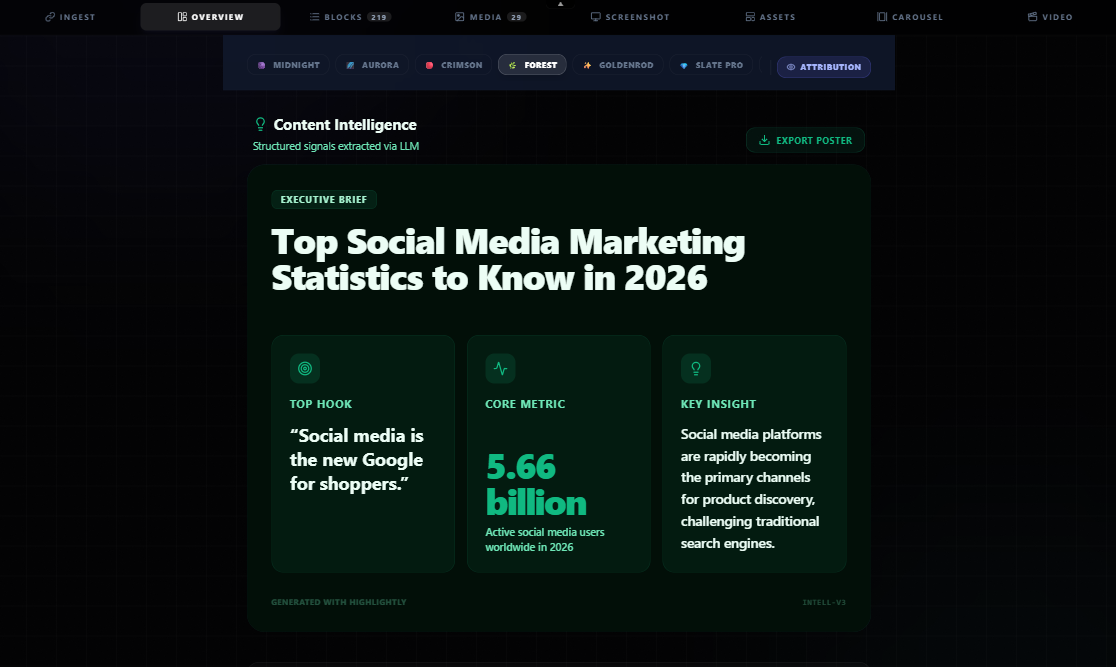
Highlightly extracts material from sources — quotes, stats, hooks, key points, facts, screenshots, and caption angles — but it does not auto-publish. Every extracted atom is a suggestion. The human reviews, chooses, edits, brands, and exports. The AI handles the speed work. The human handles the judgment.
This is not a limitation. It is the design. The tool should make it easy for humans to override, edit, and reject AI suggestions. If the tool makes it easier to publish without review than to review before publishing, the tool is part of the problem.
Try the workflow
Extract with AI. Publish with human judgment.
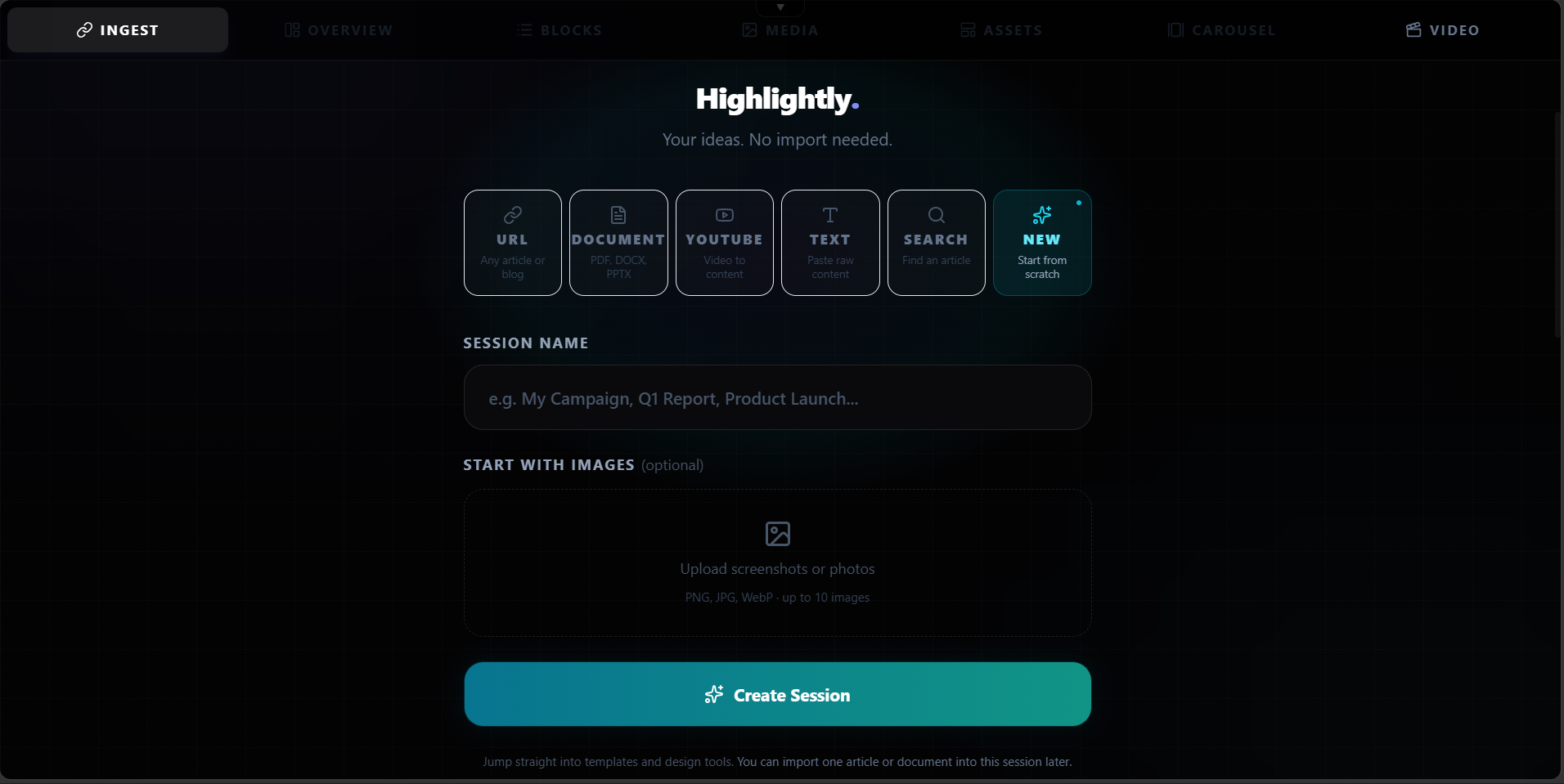
Paste a URL, upload a PDF, or add text. Highlightly extracts the candidates — quotes, stats, hooks, key points. You review, edit, brand, and export. Fast extraction, human quality.
Try HighlightlyAI extraction
AI surfaces candidates from the source. Humans choose what to publish.
The four-step workflow: extract (AI), review (human), edit (human), publish (human). Each step has a clear owner. AI handles the speed work; humans handle the judgment.
Frequently asked questions
Research sources