Most AI content tools start with a prompt. That feels natural because prompts are fast. You describe what you want, the model responds, and within a few seconds you have a caption, image idea, carousel outline, or blog draft.
But for social content that needs credibility, a prompt is often the wrong starting point. A prompt asks AI to imagine an answer. A source-first workflow asks AI to work from material you already trust: an article, report, transcript, PDF, research note, customer story, or interview.
The public test
The difference shows up when the output becomes public
Prompt-first content is useful when you need ideas, variations, headlines, or visual directions. The risk is drift. The model may smooth over uncertainty, invent a supporting detail, or make a generic claim sound more supported than it is.
Source-first content starts with evidence. The first job is not "write something viral." The first job is "what in this source is actually worth sharing?"
A source-first workflow
Import the source
Start with the article, PDF, transcript, report, or pasted text instead of a blank prompt.
Extract the useful material
Pull quotes, stats, hooks, facts, key points, screenshots, and images into a reviewable surface.
Choose a human angle
The AI can surface options, but the creator decides what matters and what is fair to publish.
Turn the chosen material into assets
Create cards, carousels, captions, screenshots, or branded PNGs while keeping attribution close.
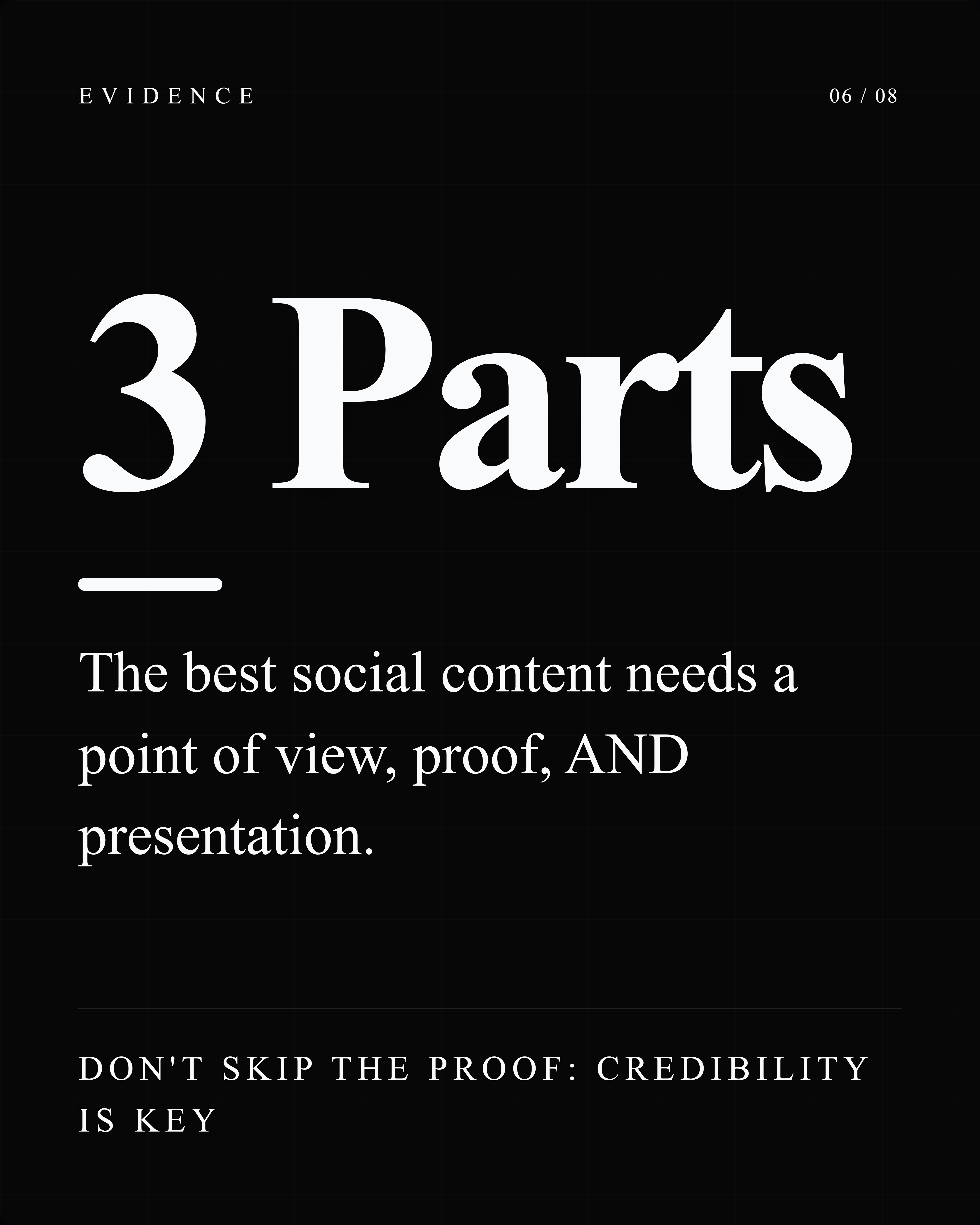
The best social content usually has three parts: a point of view, proof, and presentation. Prompt-first tools are good at presentation and sometimes point of view. Source-first tools are stronger at proof.
The content test
Strong social content needs a point of view, proof, and presentation.
Prompt-first tools can help with ideas and polish. Source-first workflows keep the evidence close enough for the final asset to feel credible.
Use AI to shorten production, not replace the evidence
Highlightly is designed for this middle layer: source in, extracted material reviewed, branded assets out. It lets AI compress the reading, formatting, captioning, and export work while keeping the original source close to the final asset.
Use both
The strongest workflow is not prompt-only or manual-only
A serious content workflow can still use prompts. Prompts are useful after the source has been inspected. They help with tone, caption variations, headline options, and formatting. The mistake is asking a blank prompt to invent the substance before anyone has checked what the source actually says.
Try the workflow
Turn a real source into publishable assets.
Paste a URL, upload a PDF, or add text. Highlightly extracts the quotes, stats, hooks, screenshots, and caption angles, then helps you turn the strongest material into branded graphics with attribution intact.
Start with a sourceThe takeaway
If the claim matters, start with the source. Then let AI help you extract, shape, design, caption, and export without losing the receipts.
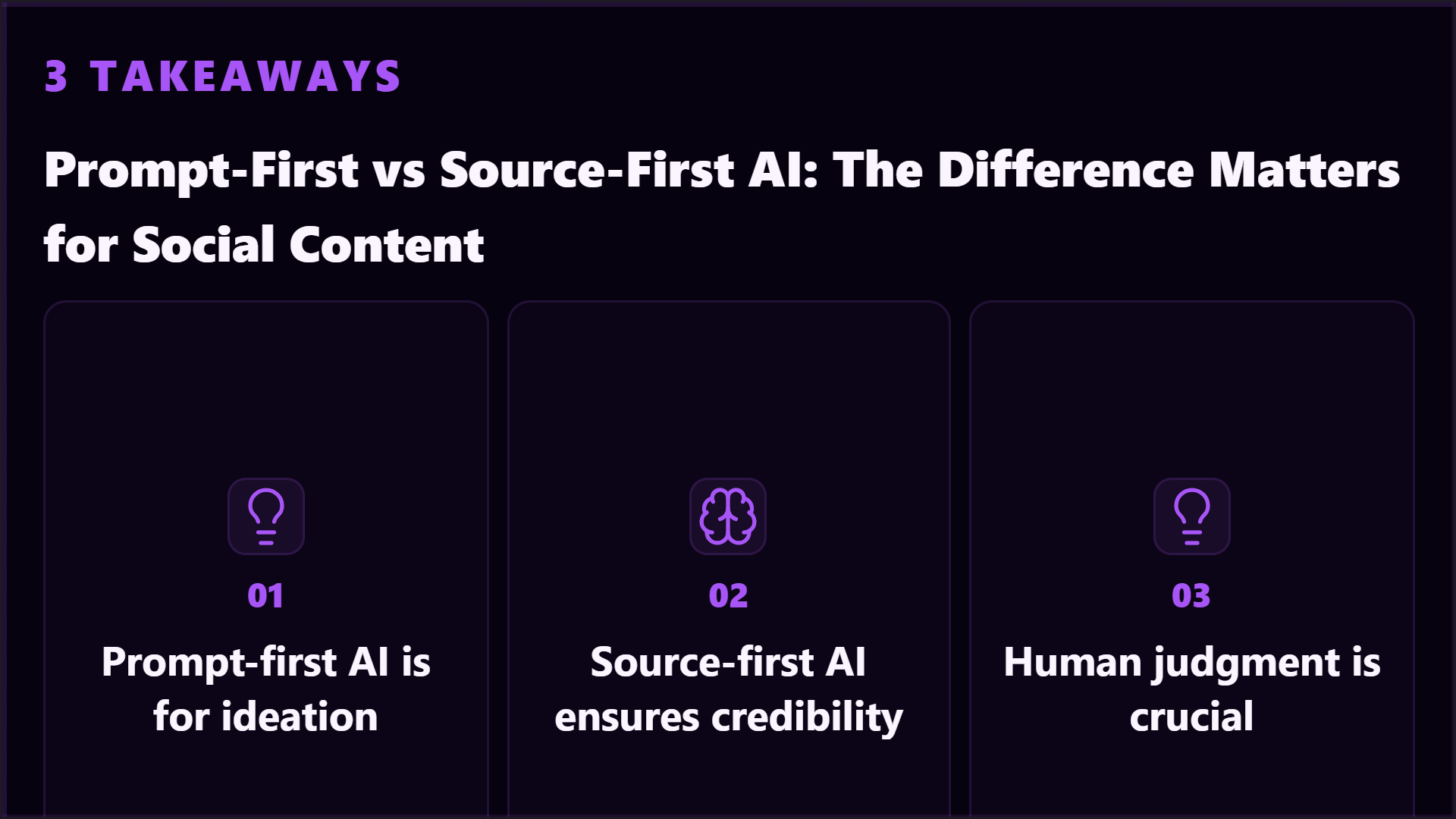
- Use prompt-first AI for ideation and variation.
- Use source-first AI when the final asset needs trust.
- Keep human judgment between extraction and publishing.
LinkedIn carousel
The source-first workflow, slide by slide.
This carousel turns the article into a ready-to-share sequence without losing the central argument: start with the source, then let AI help with production.

Highlightly
Source-backed social assets
2h •
Prompt-first AI is fast. Source-first AI is credible. The best workflow uses both, in the right order.
Frequently asked questions
Research sources