 Highlightly Team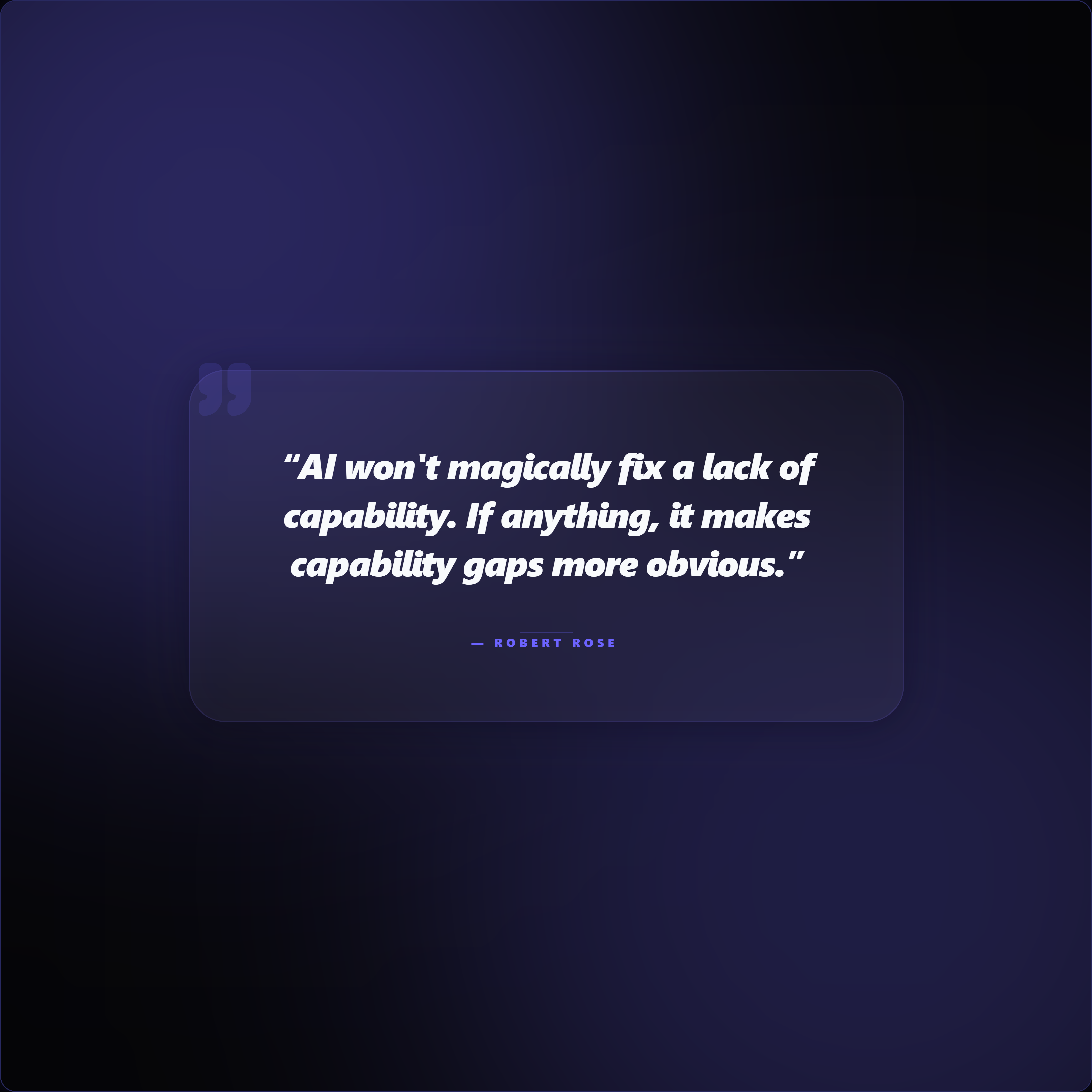
ChatGPT has become the default starting point for social media content. Need a LinkedIn post? Ask ChatGPT. Need a thread, a carousel outline, a caption, or a newsletter intro? Ask ChatGPT.
It is fast and often readable. But a blank prompt can make the production step look complete before the thinking step has happened. The output may be fluent while the claim, evidence, and point of view remain vague.
A prompt can shape an idea. It cannot become the evidence for the idea.
Use ChatGPT as a capable production assistant. Do not mistake a polished answer for a source, a customer observation, or a verified finding.
Problem one
Prompt-first content starts with fluency, not substance
When you ask for a post about a broad topic, the model has to invent the claim, choose the angle, and package the result at the same time. It can produce the most plausible version of the topic, which is exactly why the result often feels interchangeable with everyone else's.
The familiar pattern is easy to recognize: a bold opener, three tidy lessons, a generic personal-sounding paragraph, and a question at the end. The structure is not automatically bad. The issue is that structure can hide the absence of anything specific to the author or the audience.
Problem two
No source means orphaned claims
Try a simple test on any social post: where did this claim come from? If the answer is a report, interview, dataset, or named experience, the reader has somewhere to start. If the answer is only that the sentence sounds right, the claim is difficult to evaluate.
This is where unsupported statistics and invented quotations become dangerous. A content tool may generate language that sounds authoritative, but responsibility for the source still belongs to the person publishing it.
Problem three
Volume can dilute your signal
The seductive promise of prompt-first content is volume: ten posts in ten minutes, a week of captions in one sitting, or a full calendar from one topic. But more output does not automatically create more attention. If the posts are interchangeable, every additional post reinforces the same weak signal.
The Reuters Institute's 2025 Digital News Report describes an information environment where trust is already under pressure. In that environment, a content workflow should make the origin of a claim easier to understand, not easier to hide behind polish.
The alternative
Start with a source, not a blank prompt
Use an article you read, a report your team produced, a customer conversation, a research paper, a product document, or a transcript. Then ask a better question: what in this source is actually worth sharing?
A source-first content workflow
Find the source
Choose material with real substance: a report, article, PDF, transcript, interview, case study, or product document.
Extract the material
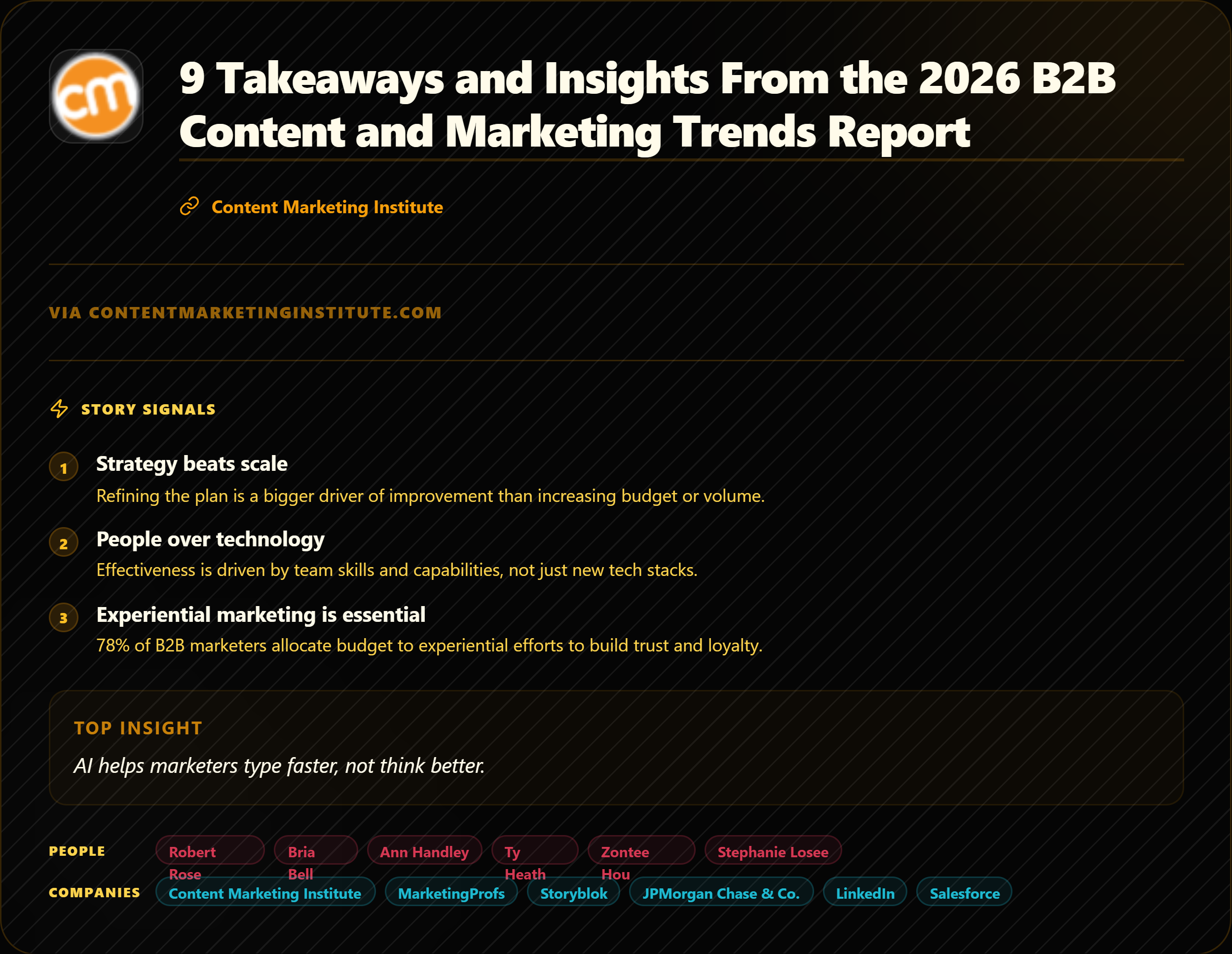
Surface exact quotes, statistics, key points, hooks, screenshots, and surprising details. Look for specifics, not just themes.
Choose the angle
Decide what your audience should understand or do. This is the editorial decision, and it should remain human-owned.
Design the asset
Match the material to the format: quote card, stat graphic, carousel, annotated screenshot, thread, or caption.
Add attribution and review
Keep the source visible, verify the claim, and remove anything you would not stand behind if a reader asked for context.
A practical test
Would the post exist without this source?
If the answer is yes because the post is only a general opinion, it may still be useful, but it should not present itself as research-backed. If the answer is no because the post depends on a specific quote, number, chart, or observation, keep that connection visible.
Where AI helps and where judgment belongs
Highlightly workflow
Use AI around the source instead of instead of the source
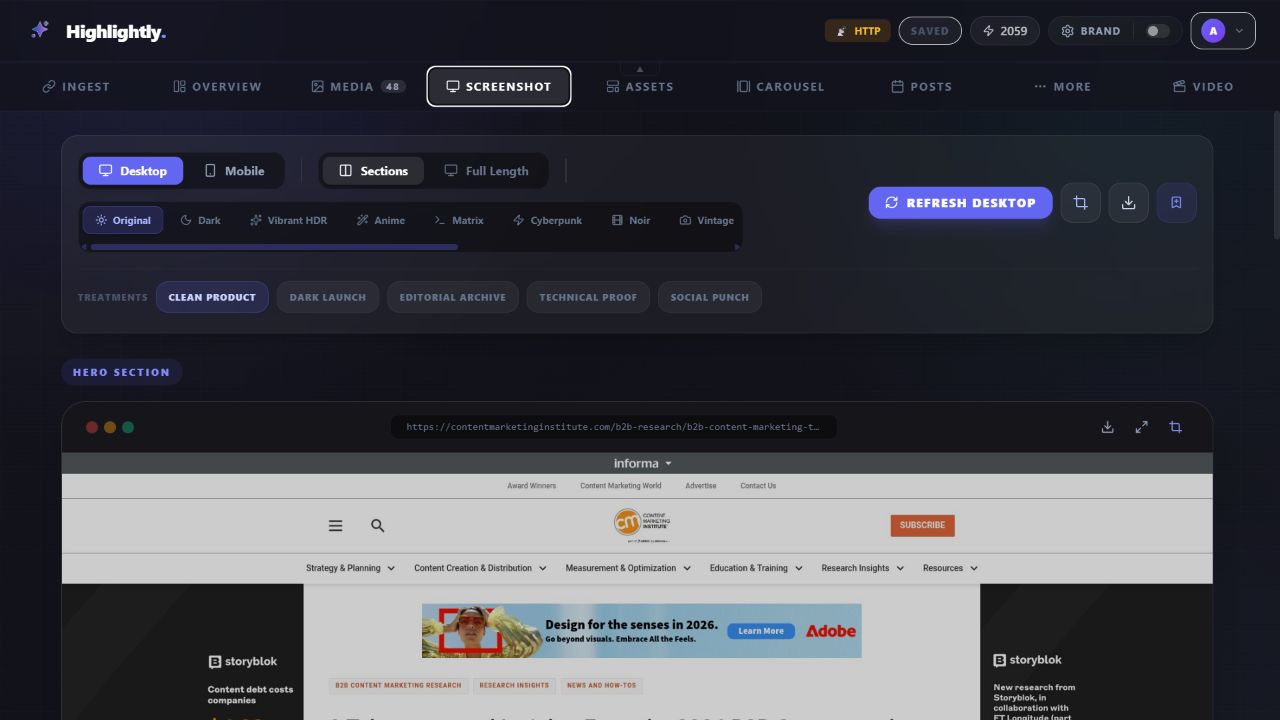
Highlightly starts with the material: paste a URL, upload a PDF or document, add text, use a YouTube link or transcript, or search for an article. It extracts quotes, statistics, hooks, facts, key points, screenshots, and media so you can review the source-backed options before you design.
From there, choose the strongest material and turn it into branded cards, screenshots, carousels, captions, and high-resolution exports. The product handles the repetitive work. You still choose the claim, the frame, and the moment when the asset is ready.
Change the starting point
Give your next AI workflow something real to work with.
Start from a source, extract the useful material, and let AI help with the production work around it.
Start with a sourceChatGPT is useful. A blank prompt is not a content strategy.
Use ChatGPT for ideation, drafting, and variations. When the content needs credibility, start with real material and keep human judgment in charge of selection, framing, and approval.
- Use AI to accelerate production.
- Use sources to create specificity.
- Publish only claims you can explain and support.
- Prefer fewer proof-backed assets to more interchangeable posts.
Prompt versus source
A prompt can shape the output. A source gives it something real to say.
The useful distinction is not AI versus no AI. It is blank-prompt generation versus source-backed production.
Frequently asked questions
Research sources