 Highlightly Team
A good report should not become one announcement post and disappear. If the material is strong, it can support a full week of social content without repeating itself.
The useful mental shift is to stop treating the report as one asset. Treat it as a source library. It contains a thesis, evidence, language, charts, implications, and questions. Each of those can do a different job in the feed.
One source. Seven different jobs.
A week of repurposing works when every post gives the audience a new reason to care. The source stays the same; the question, format, and reader action change.
Before you publish
Extract the report before you schedule the week
Do not start by writing seven captions. Start by making an inventory of what the report actually contains. Pull out the central finding, the most surprising number, the strongest quote, the clearest chart, the practical implication, the point that challenges a common assumption, and the short recap a busy reader could save.
The source inventory
- Main thesis: what changed or what should the reader understand?
- Evidence: which statistic, chart, or passage supports that thesis?
- Language: which quote makes the idea memorable?
- Implication: what should a team do differently?
- Tension: what does the report complicate or challenge?
- Context: what publisher, date, sample, or methodology should stay attached?
A seven-day report-to-social plan
Day 1: Explain the thesis
Open the week with the main finding. Use a short post or a simple graphic that answers why the report deserves attention.
Day 2: Show the strongest statistic
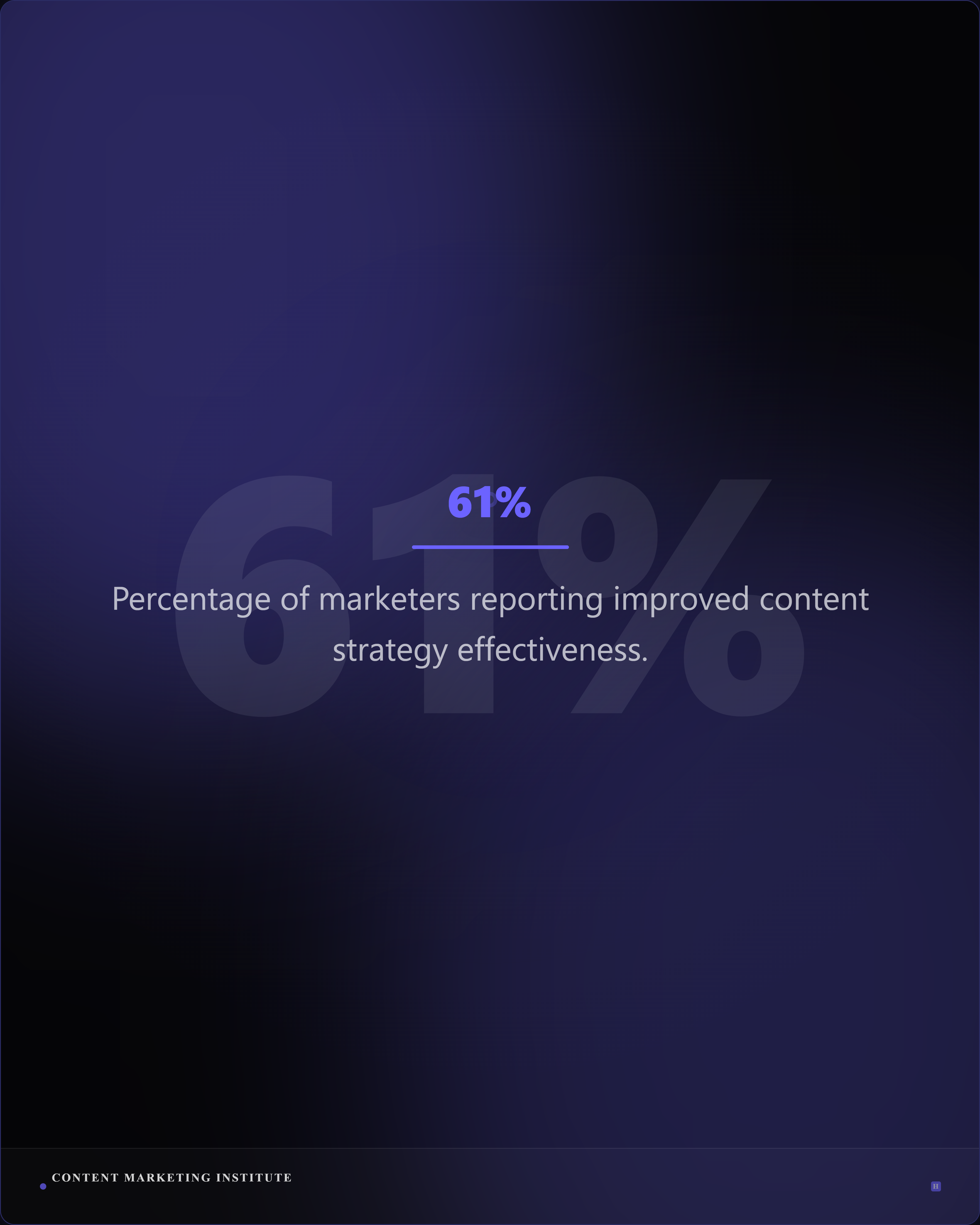
Turn one number into a readable stat card. Add one sentence explaining what the number means instead of letting it stand alone.
Day 3: Frame the best quote
Use a quote card with the speaker, publisher, and report context. Add your interpretation in the caption.
Day 4: Annotate the chart or screenshot
Show the original evidence and highlight the part readers might miss. Keep the full source context available.
Day 5: Turn a finding into an action
Translate one section into a checklist, framework, or next-step post. Label the action as your recommendation, not as a direct quote from the report.
Day 6: Surface the tension
Choose the finding that complicates the obvious story. Explain what the report says and where your own interpretation begins.
Day 7: Recap the source
Bring the strongest points together in a carousel or summary post, then send readers to the original report for the full argument.
The quality gate
Keep every post traceable to the source
Repurposing becomes risky when the asset is polished but the relationship to the source is vague. Before a post ships, check the exact wording of every quote, the denominator behind every percentage, the date of the report, and whether your caption is reporting a finding or adding an interpretation.
Proof in the workflow
The source stays close while the format changes.
Use extracted media and source screenshots as evidence, then choose the asset format that makes the idea easiest to understand.

Match the source atom to the job
Highlightly workflow
Use the source as the production system
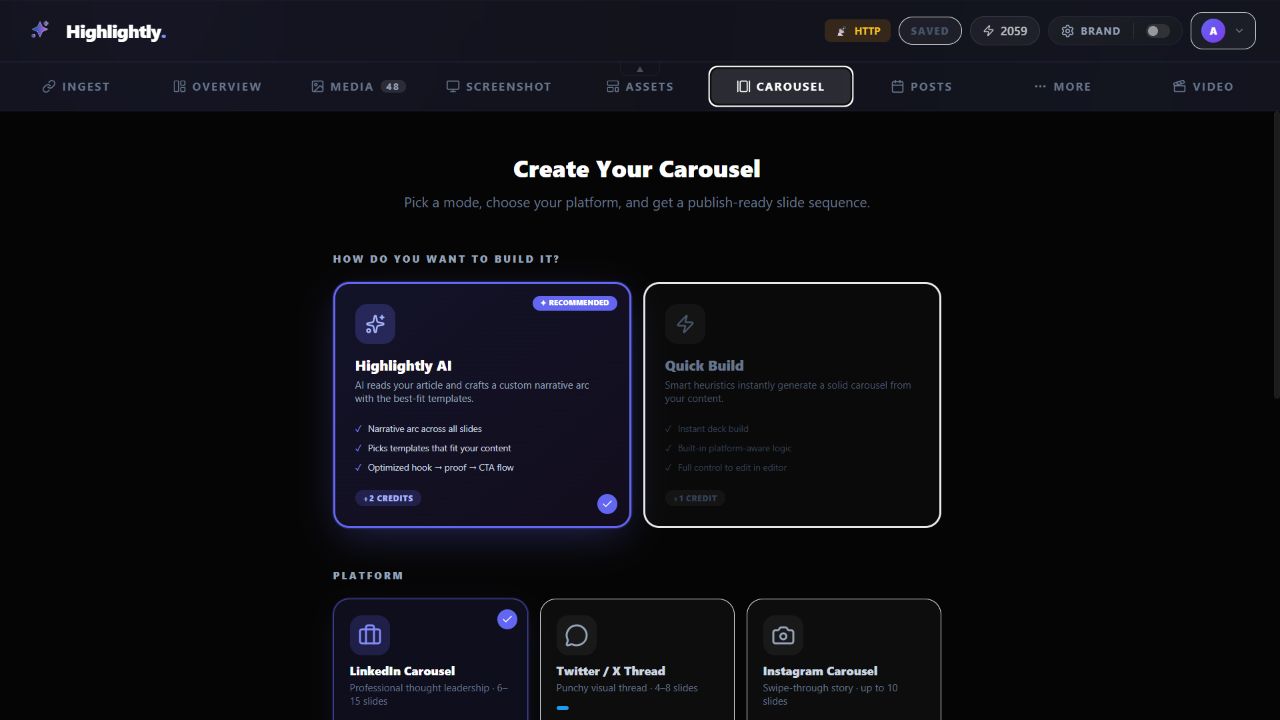
In Highlightly, paste the report URL or upload the document, then review the extracted hooks, quotes, statistics, key points, screenshots, and source media. Choose the atoms that deserve to travel, map them to cards or a carousel, apply your brand kit, and generate captions around the selected evidence.
The important part is the review step. Highlightly can surface the options and handle the repetitive production work, but you decide whether the claim is fair, whether it needs context, and what your audience should take away.
Try the workflow
Turn your next report into a week, not a single link post.
Bring in one report, review the useful atoms, and give each one a different job before you design the week.
Turn a source into assetsThe question is not how to make seven posts.
The question is how to let one strong source travel further without losing its meaning. Extract first, give each post a distinct job, keep the source visible, and stop before the week turns into repetition.
- Use the report as a source library.
- Make every post teach, prove, explain, challenge, or recap something different.
- Keep attribution and context attached through design and captioning.
Source to week
Start with the source, then give every post a different job.
A report can teach, prove, challenge, summarize, and invite discussion without repeating the same sentence seven times.

Frequently asked questions
Research sources