 Highlightly Team
Reach is tempting because it is visible. Proof is quieter, but it compounds.
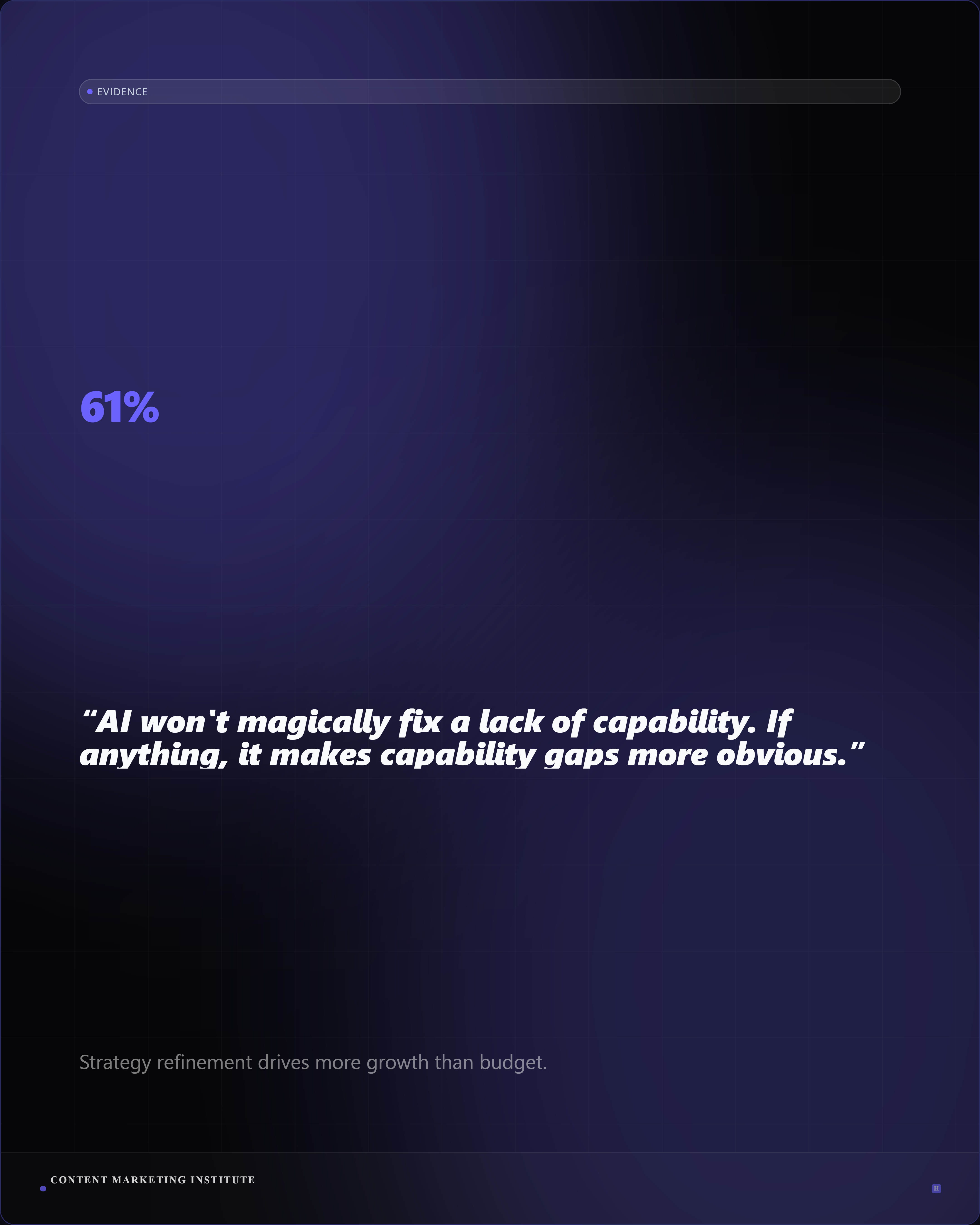
A proof asset is any piece of social content that carries evidence with it: a quote card with attribution, a statistic from a report, an annotated screenshot, a chart breakdown, a source card, or a carousel slide that points back to the original material.
The internet is not short on opinions. It is short on opinions with receipts.
Proof does not make a post automatically good. It gives the audience something concrete to inspect, save, challenge, share, or use in their own thinking.
Why they travel
Proof assets give people something to react to
A generic opinion asks the reader to accept your framing. A proof asset gives them a surface to look at. That surface might be a line from an interview, a number from a report, a chart with a clear annotation, or a screenshot that shows the original context.
That makes the idea more useful in conversation. A reader can quote the sentence, send the chart to a colleague, save the statistic, or disagree with the interpretation while still seeing the material underneath it.
The proof asset toolbox
The creator's job
Evidence needs a point of view
A proof asset should not become a screenshot dump. The source provides weight; the creator provides meaning. This is the difference between saying this report says X and showing the one line that explains why X is changing for your audience.
A strong proof asset is
- Specific enough to evaluate.
- Readable on the intended screen.
- Attached to enough context to avoid a misleading crop.
- Designed for the platform and the reader's next action.
- Framed by an observation that belongs to the creator.
- Attributed in a way that survives resharing.
A simple review
Can a reader tell what to trust and what to interpret?
Before publishing, separate the source's words from your own. Put the publisher, speaker, date, and link where they remain legible. If the number needs a denominator or timeframe, include it. If the screenshot needs surrounding context, show more than the single highlighted sentence.
Build a proof asset in five moves
Choose the receipt
Start with the quote, number, chart, screenshot, or passage that has the most explanatory power.
Write the observation
Explain what you want the audience to notice and why it matters to them.
Design for scanning
Use hierarchy, contrast, and whitespace so the evidence is readable before the caption is opened.
Attach the source
Keep attribution, date, speaker, publisher, or link close to the claim.
Review the crop
Check that the design does not remove context or turn a partial finding into a universal statement.
Highlightly workflow
Make receipts part of the normal production path
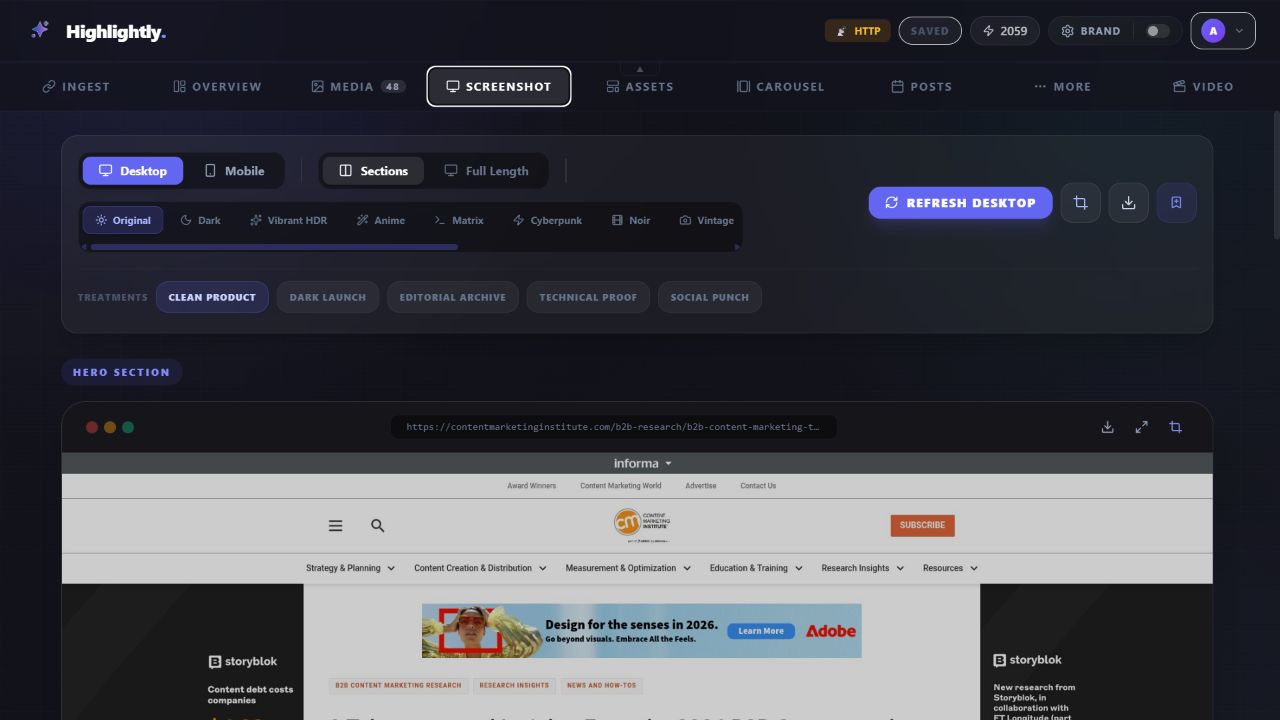
Highlightly can ingest an article or report, surface quotes, statistics, screenshots, and source media, and keep the evidence visible while you choose a card, carousel, or screenshot treatment. Apply your brand kit, write a caption around the observation, and export the proof asset in the ratio you need.
Build with evidence
Give your next strong opinion a receipt.
Find the quote, number, chart, or screenshot underneath the idea, then make the evidence as easy to understand as the claim.
Create a proof assetProof is not decoration. It is part of the idea.
The strongest source-backed content combines a concrete receipt with a human observation. Use the source to create weight, the framing to create meaning, and the design to make both easy to inspect.
- Make evidence visible.
- Give the reader a reason to care about the receipt.
- Keep attribution attached when the asset travels.
Proof assets
Make the evidence easy to inspect, save, and share.
The source supplies weight. The creator supplies the observation that makes the evidence useful in a feed.

Frequently asked questions
Research sources