 Highlightly Team
LinkedIn content that attracts leads is different from content that gets likes. It educates, demonstrates expertise, and makes the right people want to learn more. Here is the lead-generating LinkedIn content strategy that turns viewers into conversations.
The mistake is treating LinkedIn content strategy attract leads as a posting problem. It is really a source-selection problem: what proof, lesson, quote, screenshot, or customer signal is strong enough to deserve attention?
Lead thesis
Open with the funnel problem, not vanity engagement.
This is the correct hero because it frames the central issue: engagement only matters if the content creates active sales conversations.
Do not publish a claim you cannot trace back to a source.
Start with a report, article, webinar, customer story, screenshot, or internal note. Extract the strongest material, keep attribution visible, then design the asset around the evidence.
Workflow
Why LinkedIn is the highest-intent B2B social platform for leads
LinkedIn users are in a professional mindset. They're already thinking about business problems. A well-timed educational post can trigger a buying conversation because the context is professional, not social. 40% of B2B marketers say LinkedIn generates more leads than any other channel. The conversion path is shorter because trust is built through content before the first conversation.
The source-backed workflow
Choose the source
Pick one credible source that already contains the evidence: a report, case study, transcript, product screenshot, customer quote, or expert note.
Extract the atoms
Pull quotes, statistics, key points, screenshots, and objections as separate candidates instead of forcing the whole source into one summary.
Match atom to format
Use stat cards for numbers, quote cards for sharp language, carousels for frameworks, screenshots for proof, and text posts for opinion plus context.
Add the human angle
Explain why the evidence matters for your audience. This is where taste, judgment, and positioning enter the post.
Export and test
Apply your Brand Kit, keep attribution visible, export in the right ratio, and test the caption or hook around the same proof.
Playbook
The content-to-lead funnel
Map content to the buyer journey
Top of funnel
Use educational carousels, industry trend posts, and curated insights with commentary. The goal is to attract the right audience.
Middle of funnel
Use case studies, methodology posts, framework carousels, and data-backed insights. The goal is to demonstrate expertise and build trust.
Bottom of funnel
Use results posts, customer proof, and direct offer content. The goal is to trigger conversion conversations.
Playbook
Content types that generate leads (ranked by effectiveness)
Lead-generating content formats
- Educational carousel: teach a process your product enables.
- Case study story: share specific results with methodology transparency.
- Data-backed insight: add your analysis to original or curated research.
- "How we approach X" post: explain your methodology or philosophy.
- Customer pain point post: name a specific problem and show how to think about it.
- Industry trend analysis: position yourself as informed and forward-thinking.
Match the idea to the right LinkedIn format
Playbook
The soft CTA system
Use CTAs that match the post type
- Educational posts: "Save this for when you're working on [problem]" or link to a related resource.
- Case study posts: "DM me if you want the full breakdown" or "I shared more detail in my newsletter."
- Proof or results posts: "If you're working on something similar, I'm happy to share what we learned - just reach out."
- The pattern is simple: give value first, then offer more when the reader shows interest.
Execution
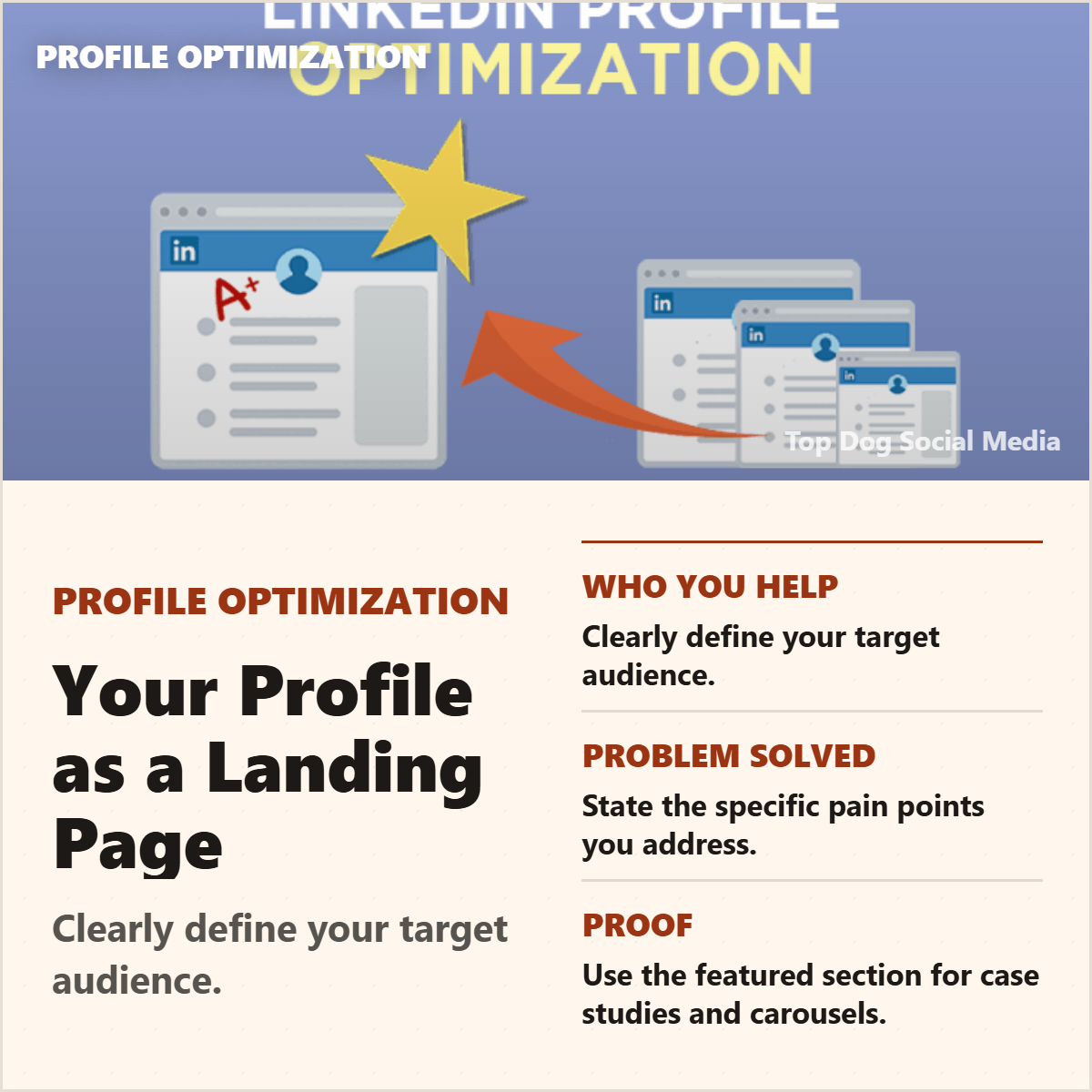
Profile optimization for lead conversion
Conversion path
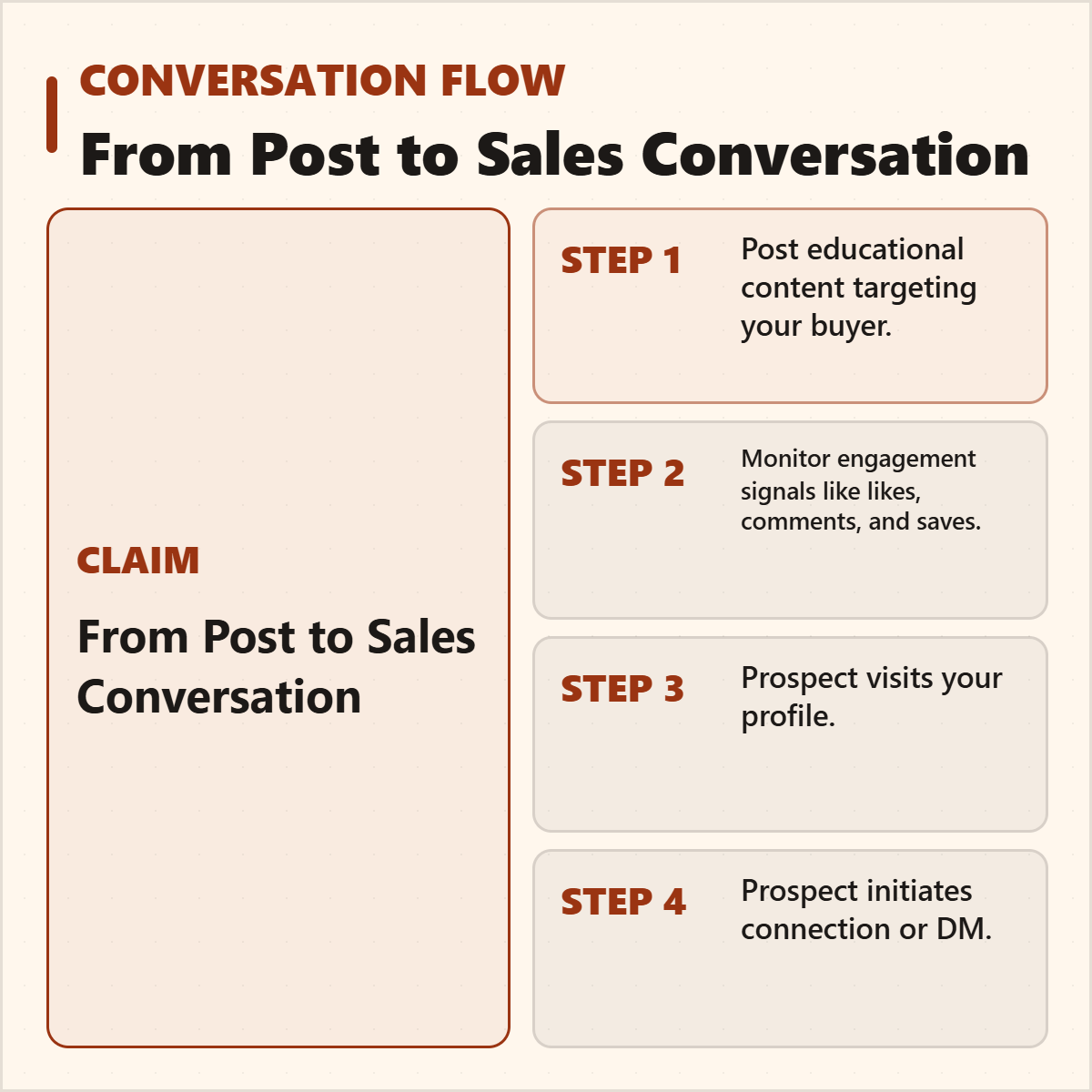
Use the conversation-flow graphic in the post-to-conversation section.
This image should sit beside the article section that explains the path from educational content to profile visit to DM or sales conversation.
Profile checks before you drive traffic
- Who you help.
- What problem you solve.
- What proof you have, including case studies, carousels, articles, or screenshots in the featured section.
- How to reach you, using a clear CTA such as DM, calendar link, or website.
Generic LinkedIn posting vs source-backed publishing
Execution
The post-to-conversation funnel system
From post to sales conversation
Step 1: Publish useful education
Your target buyer sees a post that helps them understand a problem, decision, or opportunity.
Step 2: Watch for intent signals
They engage by liking, commenting, saving, or resharing the post.
Step 3: Earn the profile visit
The post gives them a reason to check who you are and what you do.
Step 4: Open the connection
They send a connection request, reply, or DM because the topic is already relevant.
Step 5: Respond with value
Answer a question, share a resource, or ask about their situation instead of immediately pitching.
Step 6: Move only when there is fit
If the conversation reveals a real need, suggest a call or share your offering. The funnel works because you are responding to interest, not forcing cold outreach.
Execution
Content that attracts the WRONG leads (and how to avoid it)
Content that attracts the wrong leads
- Viral posts that get broad engagement from people who will never buy.
- Engagement-bait posts such as polls or controversial takes without substance.
- Generic motivation that attracts followers but not qualified buyers.
- The fix: make every post answer a question your specific buyer persona is already asking.
Highlightly workflow
Turn the source into assets without losing the proof
In Highlightly, the job is not to ask AI for a generic post. Import the source, review the extracted material, choose the quote, statistic, screenshot, or key point that deserves to ship, then apply templates, Brand Kit settings, captions, and export ratios.
Make it real
Build the post around proof, not vibes.
Pick the buyer objection you hear most often. Feed the best source that answers it into Highlightly and publish the proof before you ask for the meeting.
Create source-backed graphicsThe best linkedin content strategy to attract leads and inbound interest starts before the caption.
Find the strongest source-backed idea first. The format, design, caption, and CTA become easier once the evidence is clear.
- Start from source material.
- Keep attribution and context visible.
- Use the format that makes the idea easiest to understand.
Frequently asked questions
Research sources