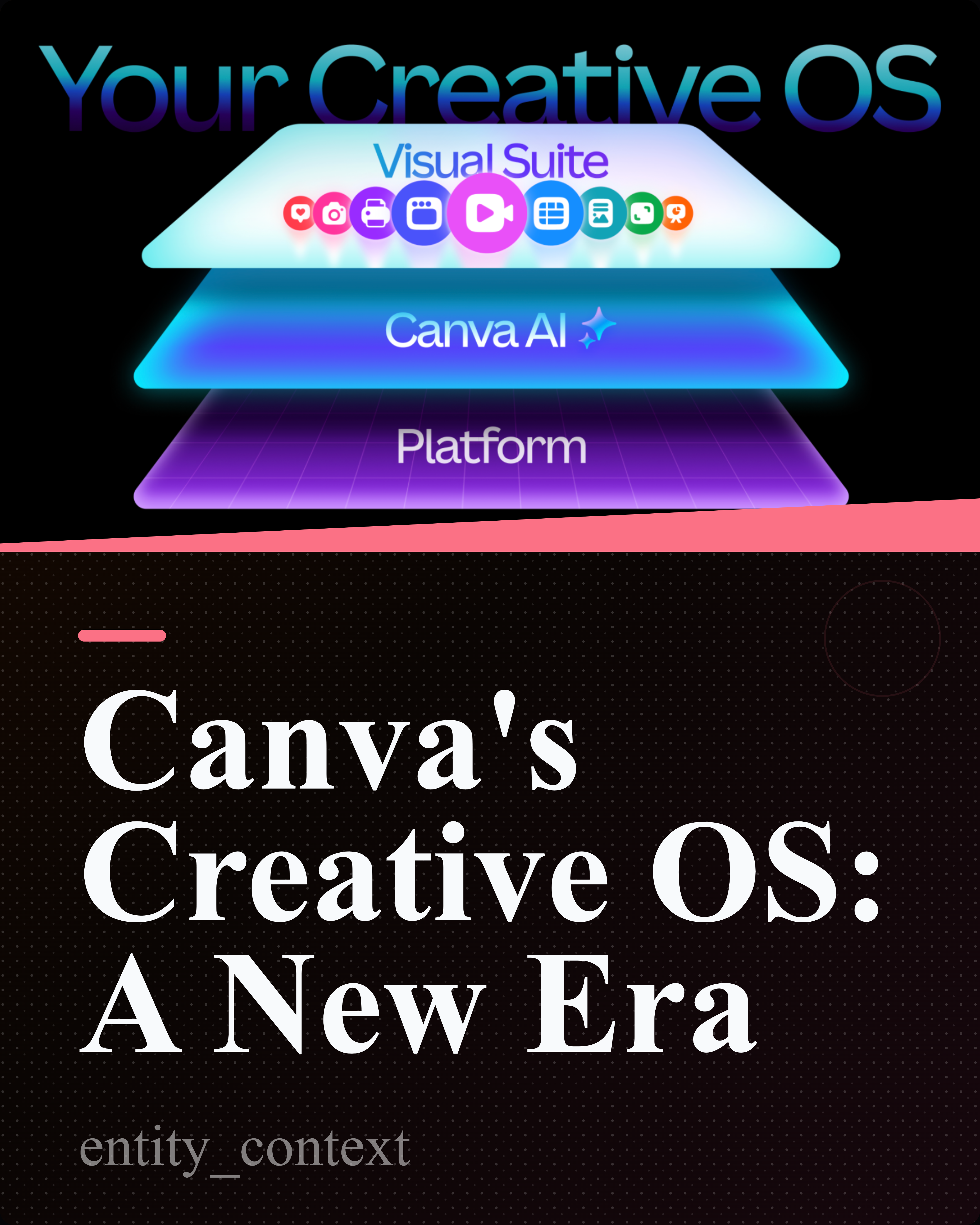
Canva is no longer just the place people go to make a poster, presentation, or social graphic. With its Creative Operating System announcement and Canva AI expansion, Canva is clearly pushing toward a larger idea: a creative workspace where teams move from idea to designed, branded, multi-channel output in one place.
That is a smart direction. Most teams do not want ten disconnected creative tools. They want a system that understands design, brand, layout, campaign needs, and publishing formats.
Before design
The unsolved part comes before design
For many content teams, the raw material is not an idea in someone's head. It is a source: a report, product announcement, customer case study, podcast transcript, article, research paper, webinar, or messy document full of useful material.
The hard part is not only designing the asset. It is deciding what the source actually supports. Which sentence is quote-worthy? Which stat is meaningful? Which claim needs attribution? Which screenshot proves the point? Which detail should not be over-polished because it would change the meaning?
Source layer
The missing layer sits before design.
Canva-like systems make production easier. Source-backed teams still need to decide what the original material actually supports.
The source layer
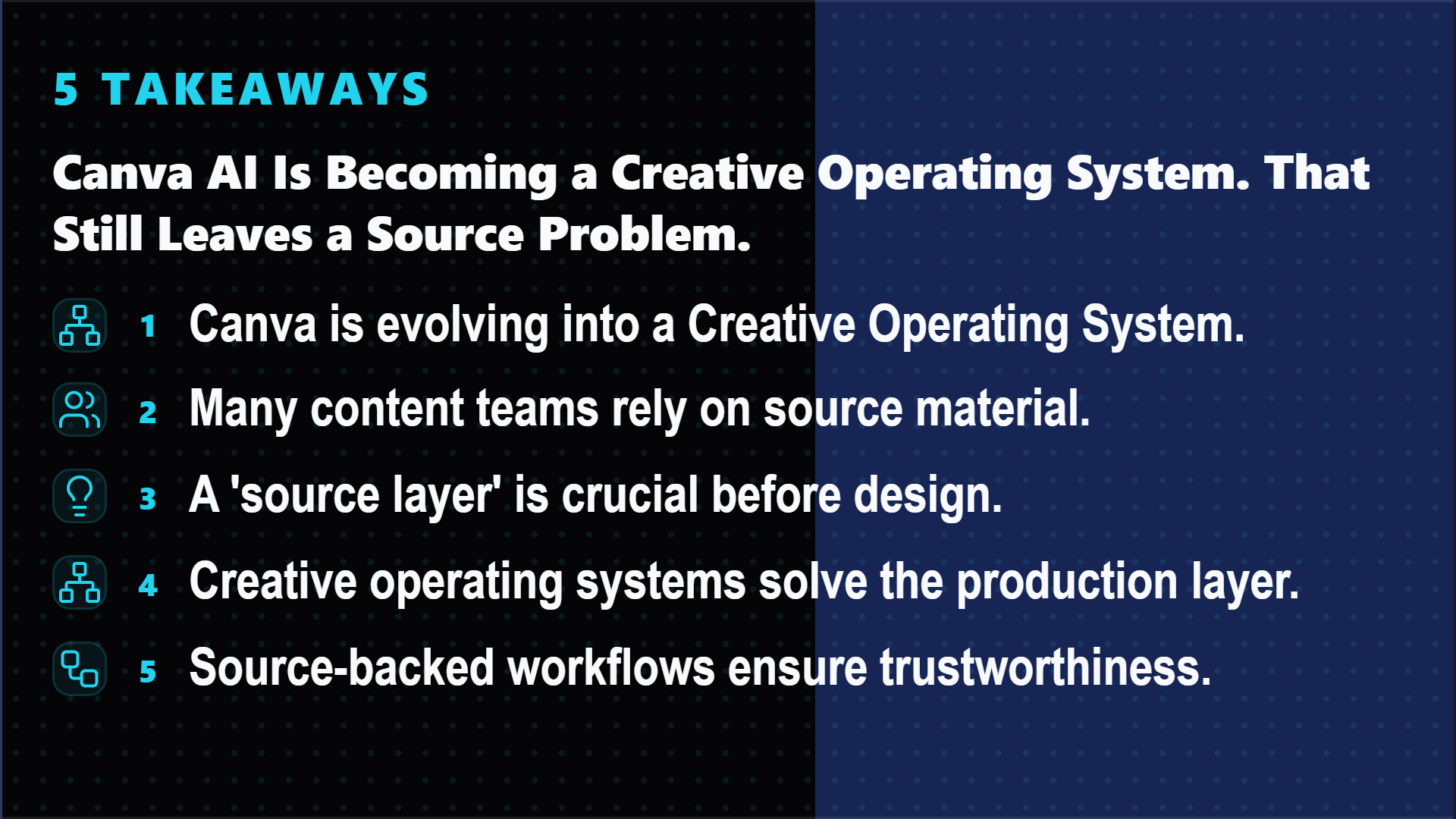
Creative operating systems need a source layer
Creative operating systems solve the production layer. They help teams make, edit, brand, and distribute assets faster. But they do not automatically solve the source layer: extracting real material from documents, preserving context, and keeping attribution visible as the asset changes format.
That is the opening for source-backed content repurposing. The output may still end up in Canva, a scheduler, a CMS, or a social platform. But the first step should be extraction, review, attribution, and human selection.
Where source-backed tools fit
Highlightly sits before the final publishing stack: import a source, extract the usable material, choose the angle, apply brand, export cards or carousels, and keep the receipts attached. It is not trying to replace every design surface; it handles the proof layer those surfaces usually do not own.
Practical split
Use the right tool for the right layer
Creative layer vs source layer
Source before canvas
Extract the proof before you design the post.
Use Highlightly to pull the strongest quote, stat, screenshot, or key point from a real source, then turn it into a branded asset with attribution and captions ready to ship.
Try HighlightlyThe bigger point
Canva is right that creative work is becoming more integrated. The next question is whether integrated creative work will also become more trustworthy.
- Use Canva-like tools for broad creative production.
- Use source-backed workflows when the content begins with real material.
- The teams that win will show where their ideas came from.
LinkedIn carousel
Canva can own the creative layer. The source layer is still open.
The carousel reframes the article as a practical workflow: extract, review, attribute, then design.

Highlightly
Source-backed social assets
2h •
Canva is becoming a creative operating system. The source layer before design is still the part serious content teams cannot skip.
Frequently asked questions
Research sources