 Highlightly Team
AI can speed up extraction, drafting, and formatting. It can also make a wrong claim look finished. Governance is the layer that turns “the model generated it” into a reviewable, accountable publishing process.
Use separate gates for source, claim, design, and approval.
A single “looks good” review is too vague. Assign a clear check to each risk: is the source available, is the claim supported, is the visual fair, and did the owner approve publication?
Not every post needs the same burden
Start with a risk-based workflow
A source-linked educational post and a regulated product claim do not need identical approval paths. The more consequential the claim, the more specific the source, reviewer, and record should be.
Simple risk routing
The five governance gates
A repeatable approval sequence
1. Source gate
Confirm the source is accessible, relevant, and permitted for the intended use. Record the URL or document and its retrieval date.
2. Claim gate
Check every number, quote, comparison, and causal statement against the source. Add unit, timeframe, population, and limitation where needed.
3. Context gate
Ask whether the asset could create a misleading impression when viewed alone. Restore missing caveats or choose a less compressed format.
4. Brand and rights gate
Check logos, colors, typography, stock media, customer permissions, and whether the visual treatment implies an endorsement.
5. Approval gate
Name the person who owns the final publish decision. Store the reviewed version and the reason for any material edit.
Keep an evidence sheet beside the draft
Minimum evidence record
Design is part of factuality
Review gates
Keep source review and brand review visible before the asset ships.
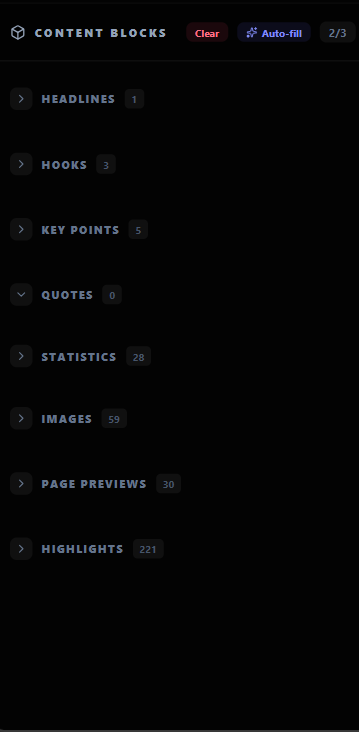
This screenshot is included for the UI step it explains: governance is a workflow with controls, not a disclaimer added after generation.
A visual can mislead without containing a false sentence. A giant percentage can imply universal success; a cropped chart can hide the baseline; a stock image can make a process look like a customer result. Review hierarchy, crop, label, and attribution—not just copy.
Visual review questions
- Does the largest text carry the same meaning as the source?
- Can a reader tell whether this is a quote, a result, an interpretation, or a recommendation?
- Does the crop remove the context that makes the chart fair?
- Are customer and third-party assets permitted and correctly credited?
Use AI where it helps; keep judgment where it matters
AI is useful for finding candidate material, organizing a long source, proposing formats, and generating a first visual direction. The human role is selecting what is true enough to publish, what needs context, and what should not be used at all.
Try Highlightly
Build a reviewable source-to-asset workflow.
Highlightly keeps extracted material, attribution, visual choices, and edits close together so your team can move quickly without losing the evidence trail.
Start from a sourceGovernance is a production system, not a disclaimer.
A clear source, a named reviewer, and explicit gates make AI-assisted content faster to trust and easier to improve.
- Review claims separately from copy.
- Keep context visible in the visual.
- Make approval ownership explicit.
Frequently asked questions
Research sources